
Daily, genre-inspired writing prompts for authors, teachers, and journaling
Currently Browsing: Blog
 The fact that no one in the legacy publishing industry knows what makes a best seller is indisputable. That fact does not mean everyone in the legacy publishing industry is an idiot. Even if J.K. Rowling experienced a dozen rejections before selling Harry Potter, and even if James Redfield self-published and sold more than 80,000 copies of The Celestine Prophecy from the trunk of his car, traditional (sometimes...
 One of my Facebook groups is discussing The Red Pen of Doom’s article “The Twitter, it is NOT for selling books.” The author, @speechwriterguy, posits an important point: “Twitter isn’t built to sell books. Or anything else.” I agree. His post, which is long, analyzes a range of variables in terms of mass media, name recognition, numbers of followers, etc., and arrives at a very challenging conclusion: “The new...
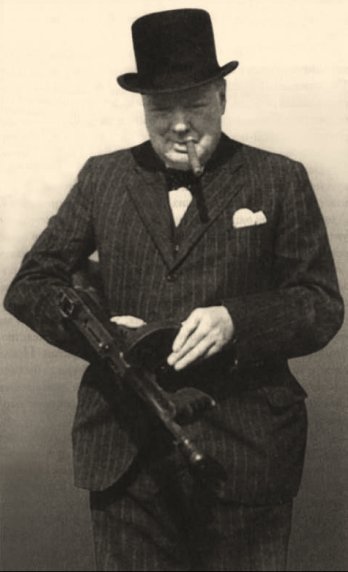 Inc. magazine has an interesting profile of the CEO of the country’s largest independent advertising agency in its November issue. Here’s what the reporter took away: Creativity doesn’t need a muse. It needs a drill sergeant. The article is good – worth reading – but doesn’t actually spend much time going into the counterintuitive nature of that headline (my thoughts on the...
 I had the pleasure of meeting Jane Friedman at a Writer’s Digest program; she’s since left that august publication and joined Virginia Quarterly Review. Lucky for all of us, she still offers terrific advice to writers on her web site. I found this post particularly useful as we head into National Novel Writing Month: 3 Steps for Using Prompts to Write Better & Get Published By Gabriela...
 I did not understand various components of English until I learned Spanish and French.* Similarly, I didn’t think much about three words that English speakers use interchangeably until I worked with people for whom English was not their first language: As Because Since Years editing non-native English speakers’ submissions to engineering and scientific journals and technology conferences taught me to...
 A college friend who is an avid reader and married to another college friend and avid writer sent this story to me with this note: “Interesting times ahead.” Big Six publishers decline to renew contract with Amazon over unfavorable terms He, several friends, and I engaged in some commentary on the article. Here’s an edited/condensed version of my thoughts: Isn’t that an old Chinese curse – interesting times?...
 I frequently hear from writers who are interested in a manuscript review or editing services, or who want to pitch an agent or publisher, and they tell me their book is 200 or 425 or howevermany pages long. When I’m feeling indulgent and patient, I’ll spend some time explaining why I don’t care how many pages their manuscript is – and why they shouldn’t, either. What counts is the number of words in the manuscript,...
 In Malcolm Gladwell’s book, Outliers: The Story of Success, he details the concept of the 10,000-hour rule. That’s a reasonably well-accepted theory that to become thoroughly proficient at something, a person needs to practice for about 10,000 hours. Gladwell’s most famous examples include the Beatles and Bill Gates. Prodigies — the exceptions who prove the rule — are popularly known. However, they...
A word about self-publishing for writers so inclined.
The 99/1 Rule, WOM, and Your Best Effort
Beat Your Muse with a Club
Everything you write makes you a better writer.
As, Because, and Since Are Not the Same Words
Interesting Times and Heavy Lifting
Words Not Pages
10,000 Hours

David B. Schlosser is an author of award-winning fiction and non-fiction, and an editor of award-winning fiction and non-fiction.
Read More...