
Daily, genre-inspired writing prompts for authors, teachers, and journaling
Currently Browsing: Teachers
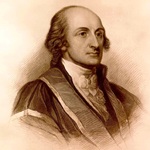 On this date in 1789, John Jay was sworn in as the first Chief Justice of the Supreme Court of the United States. He wrote, “Those who own the country ought to govern it.” Explain this principle in your own words.
 Movie camera inventor Auguste Lumière was born on this date in 1862. He once said, “My invention can be exploited … as a scientific curiosity, but apart from that it has no commercial value whatsoever.” Explain who someone who is very smart can also be very wrong.
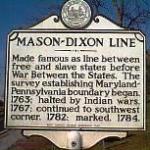 On this date in 1767, astronomer Charles Mason and surveyor Jeremiah Dixon completed a five-year process of plotting the line named for them that forms parts of the borders of Delaware, Maryland, Pennsylvania, and West Virginia. Explain why boundaries are so important to people.
 On this date in 1851, Herman Melville published Moby-Dick. Think about something who is so important that you would travel around the world for years to get it. Then explain why it’s so important to you.
 “A small man can be just as exhausted as a great man.” -Arthur Miller, born on this date in 1915, in Death of a Salesman. Describe two examples you’ve seen or experienced in your life that demonstrates this truth.
 “Let all the time you can get be spent in trying to learn to read.” -Jupiter Hammon, the first published African-American writer in the United States, who was born into slavery on this date in 1711. Describe the most important difference between someone who can’t read and someone who can.
 “Obsessed by a fairy tale, we spend our lives searching for a magic door and a lost kingdom of peace.” -Eugene O’Neill, born on this date in 1888. Describe the lesson of life you think you are most likely to learn is not true after you graduate.
 Noah Webster, for whom the famous dictionary is named, was born on this date in 1758. Explain why you think it’s more important to be grammatically correct or to be understood when you’re writing something.
Secondary – October 19
Primary – October 19
Secondary – October 18
Primary – October 18
Secondary – October 17
Primary – October 17
Secondary – October 16
Primary – October 16

David B. Schlosser is an author of award-winning fiction and non-fiction, and an editor of award-winning fiction and non-fiction.
Read More...